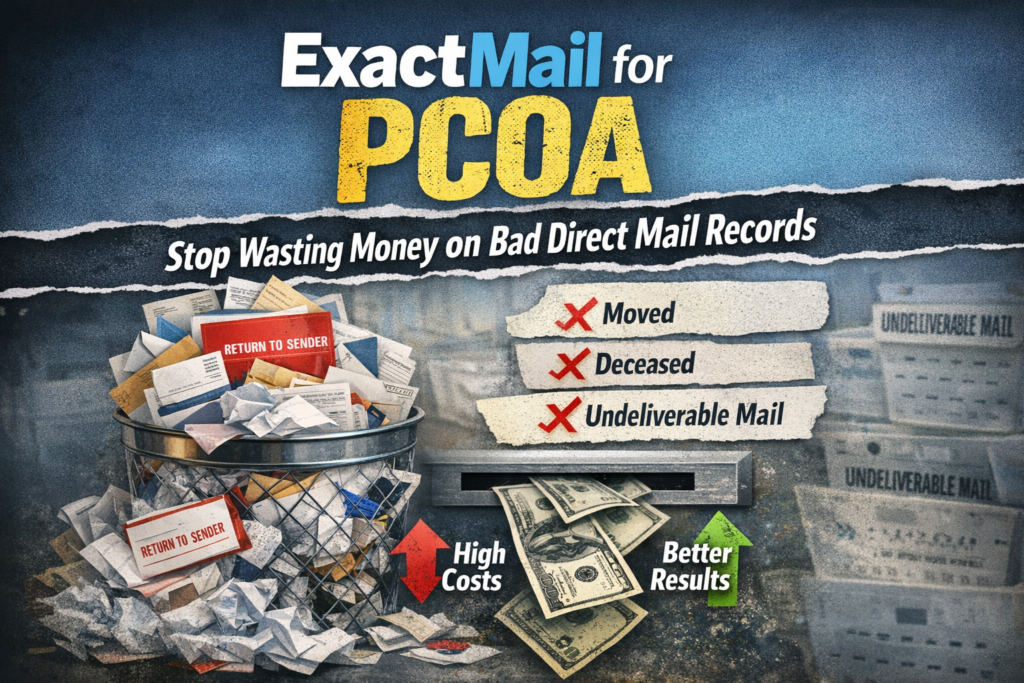

Reduce Direct Mail Costs starts with a simple truth. If your file is wrong, every savings move after that gets weaker. That is why smart mailers start with better customer data before they touch format, paper, or postage.
Use The Title That Matches The Search
Most teams look for savings in the wrong place first. They trim print costs, test smaller packages, and watch weight. All the while, they keep mailing to bad addresses.
That is like shaving ounces off your tackle box while your chart still shows last season’s shoreline. I have seen this for years. Too many groups spend more on postage each year while the file quietly decays.
If you manage 30,000 records or more, small errors add up fast. About 15% of most customer files hold wrong or old postal addresses. So the first cost problem is often getting mail delivered, not design.
Reduce Direct Mail Costs By Fixing The File First
Start here. This is the step most people skip.
Younger households still respond to mail, but they also move more often. So the upside and the waste can rise at the same time. According to direct mail response data, 85% of Gen Z and Millennials engage with direct mail.
That is a real chance for real estate, home services, and insurance marketers. Still, response does not matter if the piece never shows up. Before you raise volume, run data hygiene, remove stale records, and find recent movers.
Waiting costs money. People move, pass away, change phone lines, and leave old emails behind. Your file does not stand still just because your campaign calendar did.
What Drives Direct Mail Costs The Most
Five things drive most mail costs. Some show up on the invoice. Others hide in the file.
- Postage and package production
- Returned mail from bad postal data
- Loose targeting that mails low value households
- Poor format choices that add weight without adding response
- Slow refresh cycles that let decay spread between drops
I was on a call with an agency owner recently, and this exact issue came up. They were focused on Direct mail cost per 1,000, but a stale client file was doing more harm than the print bid.
That is where address append services become useful. You are not buying names. You are improving the value of the customer data you already own.
NCOA And PCOA Are Not The Same Job
Get the mover process right. That part matters.
PCOA is the annual mover process. It includes NCOA in the workflow and also includes Deceased Processing, plus more mover data beyond official USPS filings.
NCOA uses official USPS change of address filings. Inside the PCOA workflow, it helps support a full annual mover pass. After that, NCOA works best as ongoing upkeep between annual PCOA runs, usually quarterly or more often.
| Feature | NCOA | PCOA |
|---|---|---|
| USPS Change Of Address | Yes | Yes, included |
| Proprietary Mover Data | No | Yes |
| Deceased Processing | No | Yes |
| Additional Mover Data | No | Yes |
| Recommended Frequency | Quarterly or more | Annually |
| Best Use | Ongoing upkeep | Full annual cleanup |
On identified mover records, PCOA is typically 80% or more accurate, based on input quality. If you want a clearer view of the workflow, review PCOA processing before your next major drop.
Target Better Before You Print More
Cost control is not just postage control. It is audience control too.
A fundraising director may need donor retention groups split from lapsed names. A home services brand may need owner occupancy and property traits. An insurance marketer may need age bands, home details, or auto related fields.
That is where many teams mix up enrichment and mover work. CIMA adds demographics, property elements, and auto elements. It does not process moves.
Done right, better targeting cuts waste without hurting response. Since 2009, clients have typically seen 10% to 30% gains in data quality. This also helps teams asking How much does it cost to send flyers in the mail.
Postage Savings Come After Delivery
Postage gets the most attention first. I understand why.
USPS Direct Mail rates are easy to see, and bad data stays hidden until returns pile up. Still, the cheapest piece is the one you never had to reprint or mail twice. The USPS explains mailing rules at business mailing guidance, but rules alone will not fix file decay.
Here is the order that protects cost and performance.
- Run annual PCOA with NCOA included
- Run NCOA quarterly or more often between major drops
- Remove deceased and stale records
- Segment by likely value before format decisions
- Then tune paper, size, and postal class
That order matters. An insurance client using automated PCOA tools saved up to $1,000 per mailing and lifted response by as much as 13%.
What To Avoid When Chasing Cheap Mail
Not every cost cut is smart. Some save money on paper and lose money in the mailbox.
Common Tradeoffs That Backfire
- Mailing older house files without mover checks
- Cutting targeting to boost volume
- Using Every Door Direct Mail when you really need named households
- Skipping suppression because the last campaign looked fine
- Assuming one annual cleanup is enough for active programs
Every Door Direct mail has a place, especially for saturation coverage. But if you are asking How to mail flyers to a neighborhood and also need named response tracking, you may need both geography and stronger house file cleanup.
For teams comparing channels, direct mail marketing support works best when mail is tied to cleaner customer records. That is how you cut waste without cutting intent.
Hidden Savings Live In Multi Channel Follow Up
Sometimes the best savings come after delivery. Make each delivered piece work harder.
That means tying postal delivery to phone, email, and follow up steps. Wireless phone append can match up to 85% of input data, including DNC numbers for non-profit and political campaigns. When DNC numbers are left out, match rates are around 60%.
Clients pay only on matched records, not on input. That gives campaign managers a cleaner way to support call follow up. A blended approach using phone and email append can help confirm reach before the next drop.
I have seen this play out across the country. When the data lines up across channels, the team stops treating each channel like its own island. Results usually get better from there.
How Often Should You Refresh Before A Drop
This is the question that matters most. The answer depends on how often you mail.
If you mail by season or around key selling windows, run PCOA annually as your big cleanup. Then run NCOA quarterly or more often, especially before larger campaigns or acquisition pushes.
For active programs, add phone and email checks as the drop date gets closer. A file is like a nautical chart. If the sandbar moved and your chart did not, the boat does not care how nice the compass looks.
For teams that want a simple place to start, automated PCOA tools can cut manual work and protect timing. Better Data. Better Marketing. Better Results.
Frequently Asked Questions
How can I reduce direct mail costs?
Start with your file, not your format. Clean mover data, remove returned mail records, and tighten targeting before you change paper or postage. That is usually the fastest way to cut waste and protect results in direct mail marketing.
What are the best ways to lower direct mail spending without hurting results?
Focus on getting mail delivered, audience selection, and timing. Annual PCOA and quarterly NCOA upkeep usually save more than cheap print shortcuts. That matters a lot when you are watching Direct mail cost per 1,000 across several drops.
How do I cut mailing costs while maintaining campaign performance?
Cut the pieces least likely to deliver or respond. Then support delivered mail with phone and email follow up when it fits. If you skip hygiene and only trim format, you usually save less than you hoped.
Which parts of a direct mail campaign drive costs up?
Postage, print, weak targeting, and old address data all raise cost. Bad records hurt the most because they eat up print and USPS Direct Mail budget without giving you a real chance to reach the household.
What tradeoffs should I avoid when trying to save money on direct mail?
Do not confuse lower volume cost with lower cost to win a customer. Saturation tools like Every Door Direct Mail can help in some cases, but they are not a replacement for named file accuracy when measurement matters. Cheap mail only helps if it gets delivered and gets acted on.
Test Your Data For Free
Before your next drop, get a file review that shows where waste is hiding. A free data review can flag mover issues, stale records, and missed contact chances that quietly raise postage and lower response.
If you want to cut returned mail, protect acquisition cost, and make better use of the records you already own, this is the next step. A short review now can save more than another round of print talks later.
About The Author
Brooks Hall is the founder and CEO of Brooks Integrated Marketing and the builder of the IMDataCenter platform. Since 2009, he has helped groups across the country improve marketing results through better customer data. When he is not running files, you will find him navigating the Everglades, where he goes by TheMapster.