
Written by: Brooks Hall • CEO, BrooksIM and IMDataCenter • Published on: June 30, 2026
Find Customers Who Moved before your next drop, or you may keep paying postage to homes that left months ago. That gets worse when migration piles up in a few markets. Teams with 30,000 or more records are leaning harder on better address intelligence through IMDataCenter.
Migration Changed Faster Than Mail Routines
According to moveBuddha’s 2025 To 2026 Migration Report, South Carolina remains America’s top move-to state for the third year in a row. Meanwhile, Washington DC is losing momentum faster than most markets. That tells you household movement is not spread out evenly.
Old suppression habits do not protect your budget anymore. I have seen this play out for years.
A home services company expands into Greenville or Charleston using last year’s file logic. Then the team wonders why response slips even as population moves its way.
Mailing data works like a nautical chart. If the shoals moved and your chart did not, the problem is the map.
That is why routine data hygiene needs to move from annual upkeep to active campaign planning. When mover velocity shifts by state, timing matters just as much as creative.
What Find Customers Who Moved Really Means
The phrase sounds simple, but marketers use it in a few ways. Most often, they mean households that changed address.
Sometimes they mean past buyers who moved to a new city. In B2B, they may mean contacts who changed employers.
Here is what most people miss about this. Address updates are only the first step.
A stronger workflow can also add new phones through phone append, validate deliverability, and flag when a mover now fits a better service area or donor profile.
Why Stale Files Waste More In Hot States
When migration clusters in a few states, stale records cost more. A regional mail drop into the Carolinas has more upside now, but only if addresses match where households actually landed.
Otherwise, three costly things happen.
- Undeliverable mail rises in the markets you want most.
- Prospects who moved into your footprint never enter your active audience.
- Attribution gets muddy because demand shifted, but your file did not.
I was on a call with an insurance marketer in Tampa not long ago, and this exact issue came up. Their creative was solid, and their timing was decent. Still, waste showed up at the mailbox level because they treated mover updates like back office cleanup.
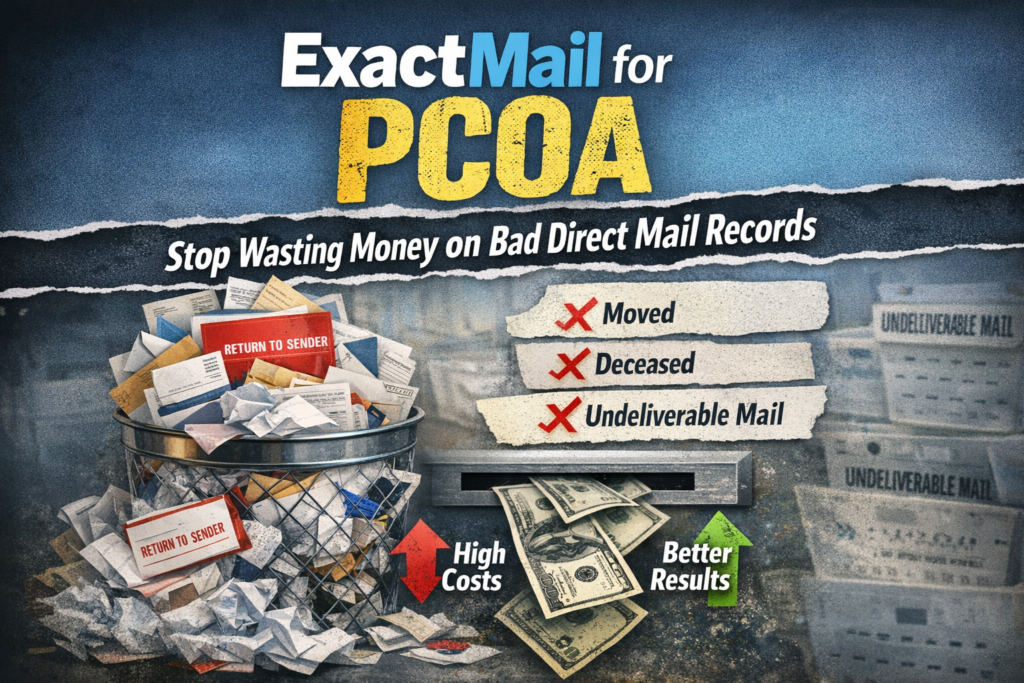
That is where PCOA processing helps. It catches near real time changes that a slower routine can miss.
How To Adjust Mover Update Workflows
The question here is practical. How should marketers adjust mover update workflows when demand shifts between states?
My answer is simple. Tighten the cycle, segment by geography, and connect mover data to campaign choices.
Shorten The Update Cadence
If you only run updates each quarter or before a big seasonal drop, you are late. In fast shifting regions, monthly processing often makes more sense.
Separate Maintenance From Activation
NCOA keeps you cleaner and compliant, but it is not the whole play. Pair it with automated PCOA so you can react closer to deployment.
Use Geography As A Decision Layer
A move into South Carolina is not just an address change. It may signal a new home insurance need, a new HVAC service radius, or a new donor welcome track.
That is operational value. Not just cleaner records.
How To Find Moving Customers Without Guessing
There is no mystery here. The best programs combine postal updates, source matching, and contact enrichment to build a usable record.
At IMDataCenter, clients often see 10 percent to 30 percent gains in data quality. Many also see 12 percent to 20 percent less wasted direct mail spend.
That matters when you mail tens of thousands of records in high movement markets.
- Run NCOA and CIMA checks before list selection
- Layer PCOA for fresher move signals
- Append missing contact points after the move
- Re-score the record by market, product, and timing
If you need broader enrichment after a move, data append services help turn a corrected address into a marketable customer profile. That is very different from only confirming mailability.
Address Change Is Only Half The Job
Once a household moves, your old contact plan often breaks with it. Landlines disconnect. Email engagement changes. Demographic assumptions drift.
If you stop at the address, you may still miss the customer.
That is why good mover strategy asks better questions.
- Did the household move into or out of your service area?
- Do you still have a working phone number?
- Did the move likely change income, home value, or family stage?
- Should the cadence shift from acquisition to onboarding?
I learned this the hard way. You can fix one field and still lose the campaign.
A chart that shows the marker but not the tide can still run you aground. For the next layer, teams often pair mover updates with demographic append and contact refresh.
Where New Mover Strategy Beats Old Suppression Logic
Old suppression logic says remove bad addresses and move on. New mover strategy says spot movement early, then change where and when you market.
That is a very different posture.
For a home services brand, new mover households can become prime prospects by ZIP Code and install season. For a nonprofit, recent movers may need a different ask because community ties are still forming.
This is also where child signals matter. Teams chasing Moving leads often focus only on acquisition, but retention and reactivation can pay back faster.
Your own house file usually holds more value than people think. When deeper identity recovery is needed, address append services can help reconnect incomplete records.
That matters when the move happened, but your CRM did not capture the new location cleanly. In some cases, a tool like Moving Helper may also support local planning around new mover outreach.
How B2B Movement Fits The Same Problem
Sometimes marketers want to find customers who moved companies, not homes. That matters for agencies, resellers, and B2B sales teams that lose a buyer contact.
The workflow feels different, but the lesson stays the same. Movement creates blind spots, and blind spots cost revenue.
Your CRM needs to recognize that a lost champion may still be a live relationship in a new account. In those cases, phone and email append matters more than postal delivery alone.
So yes, Find Customers Who Moved can mean residential movers or job changers. Stronger marketing operations plan for both, then route each case into the right follow-up path.
What Experienced Teams Do Before Response Falls
The teams that stay ahead of this problem do not wait for returned mail to tell them something changed. They build a standing mover workflow into planning, timing, and market expansion.
Here is the playbook I recommend.
- Watch migration data by state and major metro, not just your current footprint.
- Increase mover update frequency in high change regions.
- Refresh phone, email, and profile fields after an address hit.
- Test offers by newcomer status and time since move.
- Measure waste, reach, and response separately.
That final point matters. If your internal process still treats movers like an occasional exception, it is time to rethink the map.
That is one reason IMDataCenter has helped organizations improve customer data and marketing performance since 2009. One insurance client saved up to $1,000 per mailing and lifted response rates by as much as 13 percent using automated PCOA validation tools.
Questions Marketers Ask About Movers
How can I find customers who moved to another company?
Start with your house file and your lost contact history. Then enrich those records with updated business contact data so your team can reconnect with past buyers at new accounts. This works best when sales and CRM teams treat job changes as a trigger, not a dead end.
How do I identify where former customers went?
For consumer records, combine move update processing with contact enrichment and service area logic. For B2B records, use appended phone and email data to reconnect the person after the company change. Either way, you are tracing the relationship forward, not just repairing an old record.
How can sales or marketing teams re-engage past buyers after they change jobs?
Lead with relevance, not familiarity. A former buyer at a new company needs a message tied to current needs, budget, and role. I have seen agencies recover dormant value quickly when they pair updated contact data with a fresh offer and smart timing.
What strategy should I use when buyer contacts leave existing clients?
Run two plays at once. Protect the current account with replacement contact discovery, and build a second path to the departed buyer through updated data. If you choose only one, you leave revenue drifting with the tide.
What are the best ways to prospect based on job change signals?
Use job changes as one signal inside a broader scoring model. Recent movement, prior purchase history, reachable phone data, and market timing all strengthen the outreach. A good lead scoring process helps your team rank the opportunity instead of chasing every change equally.
If your file covers 30,000 records or more, small decay rates turn into real waste fast. A free data assessment can show you where mover updates, contact refresh, and better timing will likely pay back first.
You do not need more hype. You need a cleaner chart, current conditions, and a team that has navigated this water before.