
Written by: Brooks Hall • CEO, BrooksIM and IMDataCenter • Published on: June 23, 2026
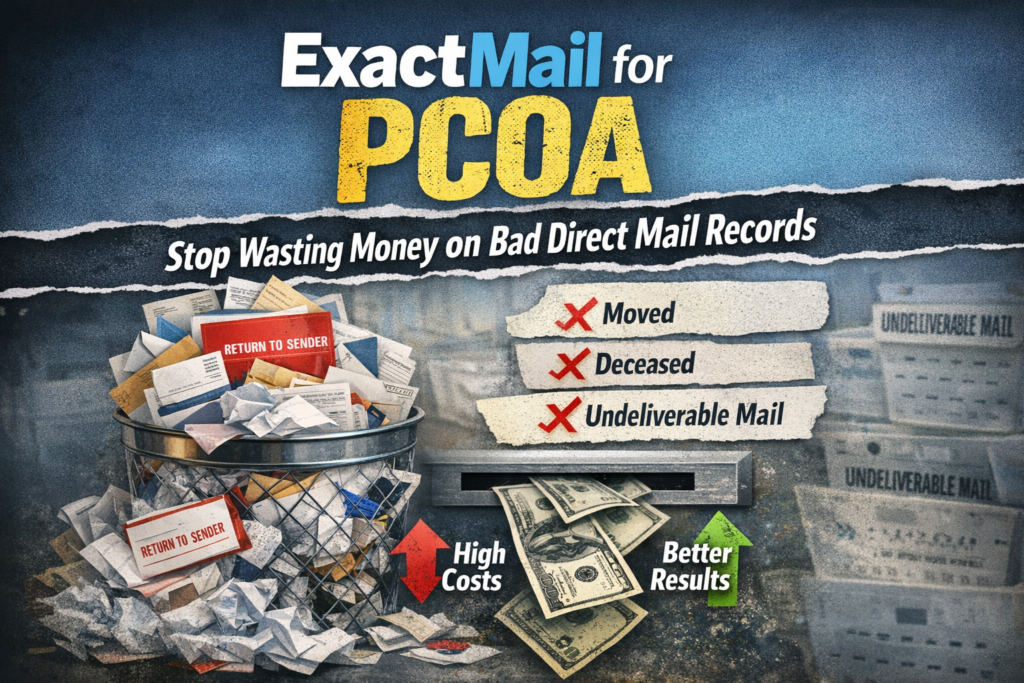
NCOA Processing can save a campaign before the first mail piece drops. Too many teams still mail records that looked fine last year but now point to the wrong home. That is why IMDataCenter pushes file review upstream, before waste shows up in the postage bill.
Why Old Mover Data Gets Expensive Fast
A mailing file is a lot like a nautical chart. If the markers are old, you can still move ahead. You may also run aground.
That is what stale mover data does to direct mail. Real estate firms, insurance marketers, and home services brands keep paying for print and postage on people who already moved. Then the response rate dips, and the creative gets blamed.
Here is the part many teams miss. USPS explains on its NCOALink page that basic providers get 18 months of move data, while Full Service providers get 48 months. If you only screen against the shorter window, you may miss older mover signals that still matter.
That gap gets costly at scale. On a 50,000 record file, a small share of missed movers can waste real money. Many mailers start with a data hygiene review before they change creative or postage plans.
What NCOA Processing Actually Does
At its core, NCOA Processing checks your file against USPS move data. The goal is simple. Update addresses, improve delivery, and cut undeliverable mail.
Plenty of people mix up NCOA Processing, NCOA USPS rules, CASS, and address validation. They connect, but they are not the same thing.
Definition Versus Workflow
NCOA Processing uses the National Change of address database tied to USPS change filings. NCOALink is the USPS method behind that work, which is why people also search for NCOA link when they want to understand the process.
Address standardization checks format. CASS helps verify deliverability. NCOA address work looks for filed moves tied to a name and address match.
In the field, that difference matters. I have seen files marked clean because the addresses were valid, yet thousands still pointed to old homes. That is why many teams pair NCOA with CIMA processing and other suppression steps instead of treating one pass as the whole job.
When 48 Month Coverage Deserves A Test
Not every file needs the same workflow. Still, some files deserve a closer look.
If your results depend on homeowner tenure, donor stability, or service geography, test 48 month coverage. Older mover data can still affect who gets delivered and who responds.
Think about a real estate brokerage mailing absentee owners. Some prospects moved two or three years ago, and the CRM never caught it. An 18 month screen may miss those changes.
The same issue hits nonprofit fundraising. Donors who moved may still want to give, but the appeal never reaches them. Agencies feel it too when match rates fall across several accounts at once.
I have seen this for years. Organizations keep spending more on postage while the file quietly decays. A short test between 18 month and 48 month coverage can show if money is slipping through the cracks.
If you are already enriching address data, address append services can help support a cleaner file and better tracking after the drop.
NCOA Processing And USPS Compliance Are Different Issues
Most mailers ask one question when they should ask two. Will this improve delivery. Will this also support compliance.
Those questions connect, but they are not identical. USPS Move Update rules cover the compliance side. Many mailers use NCOA Processing as part of that routine.
Let me be direct about this. Compliance is the floor, not the ceiling. You can meet the rule and still waste plenty of money on bad records.
The better mailers look at outcomes. They track undeliverable rates, response by segment, and lead cost by channel. They also ask how Ncoa processing usps timing fits each drop schedule.
For many teams, that review leads to automated PCOA tools for more frequent monitoring between major list runs. One insurance client using automated PCOA validation tools saved up to $1,000 per mailing and increased response rates by as much as 13%.
How To Evaluate Your Current Mover Workflow
I was talking with an agency owner in Naples last week about this exact issue. He had twelve client files, three mail dates, and no confidence the same hygiene rules were being used every time.
You do not need a huge audit. You need a simple five part check.
- Confirm which mover data window your provider uses
- Review the last date your file was processed
- Compare delivered mail and return patterns by segment
- Test 18 month results against 48 month results on a sample
- Measure the effect on cost per response or cost per lead
This is where Ncoa processing time becomes practical. Fast turnaround helps. Speed without the right coverage does not fix the core issue.
Ask clear questions. Is your provider licensed correctly. Can they explain Ncoa certification in plain terms. Do they show how the process handles names, household variation, and stale occupancies.
Teams that want a stronger before and after view often pair this work with customer profile analysis to see which segments lose the most value when address quality slips.
Where Basic Processing Stops Helping
Every mail file has a limit. NCOA Processing catches filed moves, but it will not fix every address issue in your CRM.
Here are a few common gaps.
- The customer moved but never filed a USPS change
- The record has a name mismatch that weakens matching
- The household is valid but the contact path is incomplete
- The file needs phone or email support for follow up
That is why smart workflows stack tools in the right order. Start with move updating and suppression. Then add missing channels when permission and campaign logic support it.
A home services brand may mail first, then follow up by phone with responders and non responders. If contact data is weak, phone and email append becomes part of the revenue answer, not just a data task.
IMDataCenter has helped organizations improve customer data and marketing results since 2009. Clients often see 10% to 30% data quality gains and 12% to 20% less wasted direct mail spend. That is not magic. It is what happens when stale records stop steering the campaign.
How Broader Contact Intelligence Improves The File
A cleaner mailing address gets more pieces delivered. A better contact record helps you do more with each delivered household.
That matters when the record still has value but needs a different channel mix. If a prospect moved recently, mail may need support from phone outreach, email, or better segmentation.
For example, a real estate or insurance team might verify mover status first, then add missing contact paths through phone append to improve follow up speed. Another team may use email append after delivery to support a coordinated sequence.
This is also where people ask How to access ncoa database. Most marketers do not use the USPS source directly. They work through licensed providers that return usable results inside a campaign workflow.
The same idea applies to segmentation. If your best households are moving more often than expected, demographic append can help show who still fits your target after the address work is done.
Five Questions Smart Mailers Ask Now
What is NCOA Processing?
NCOA Processing uses USPS change of address data to find people who moved before you mail. It helps reduce undeliverable mail and improve file accuracy. On larger files, that protects budget fast.
What is the official USPS process for NCOA?
The official USPS framework is NCOALink. It is the Postal Service program tied to move update processing. Most organizations work through licensed providers that return updates in a usable production format.
What source defines or governs NCOA processing?
USPS is the source of record, and PostalPro is the main reference point for program rules and service details. If a provider cannot map their workflow to USPS rules, ask more questions.
What database or dataset is used in NCOA processing?
The process uses the National Change of address database built from USPS change filings. That is why NCOA USPS wording matters. You are not only checking format. You are screening against real mover activity.
Who can perform NCOA processing and how does it work operationally?
Licensed providers perform the work by matching your file against NCOALink data and returning updates, moves, or suppressions. In practice, that output often feeds a broader workflow with CASS, dedupe, enrichment, and timing controls.
Talk With A Data Expert
If you are wondering if you are suppressing enough stale mover records before the next drop, you are asking the right question. A quick test between your current workflow and fuller mover coverage can show a lot before more postage goes out the door.