
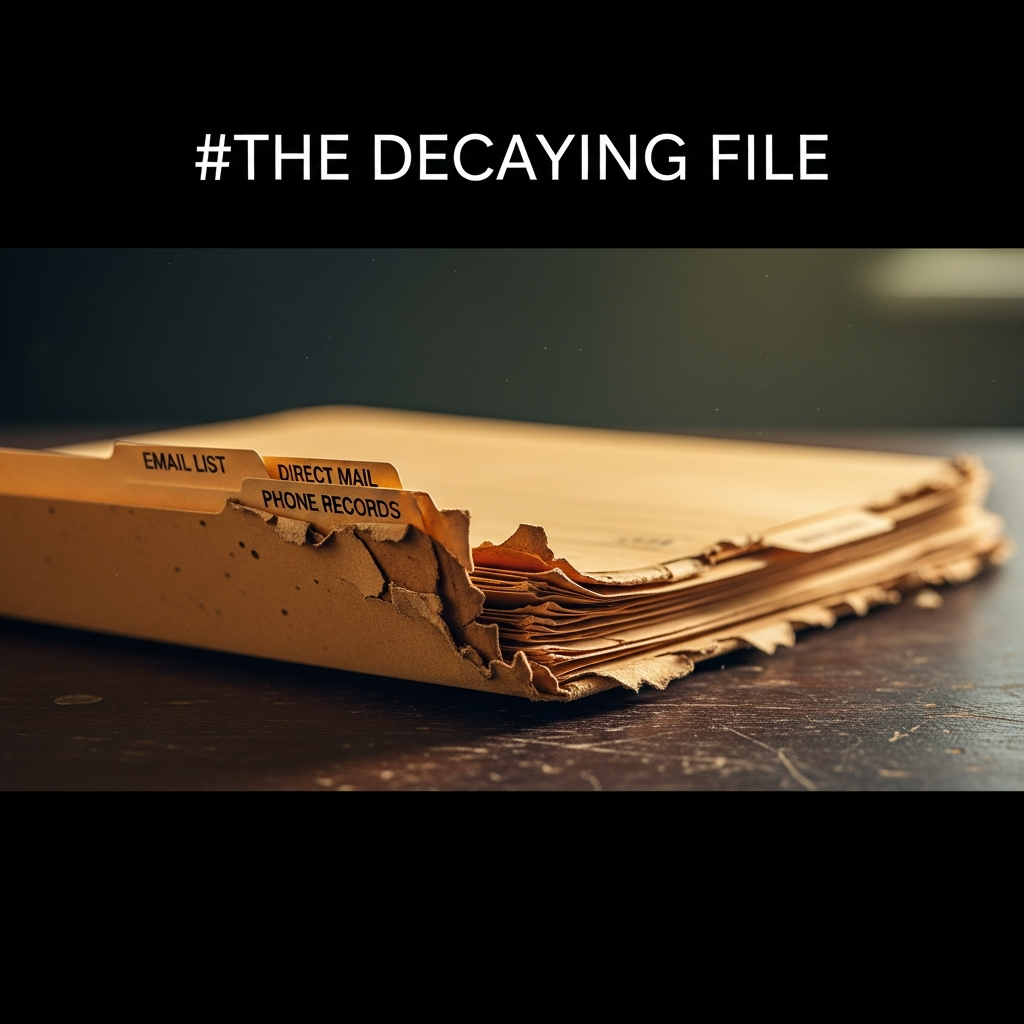
verify email address is often treated like an email issue, but it can be an early sign that your whole customer file is drifting. When one channel starts to slip, the others are usually close behind. That is why teams that care about mail ROI should watch email hygiene and the full house file at IMDataCenter.
Why Verify Email Address Work Matters To Mailers
I have seen this for years. A fundraising team sees more bounces first. A few months later, the same file shows weaker grouping, stale household data, and more returned mail.
That pattern is not random. According to email list decay research, at least 23% of an email list degrades each year. For direct marketers, that matters because email decay often points to wider record drift that can raise postage waste before response reports make it plain.
USPS has long shown that Americans move a lot. That is why official change of address activity matters to serious mailers. When people move, change jobs, leave old inboxes, or stop using an account, each customer touchpoint starts to lose accuracy at the same time.
Here is what most people miss. Email decay rarely stays in email. It spreads into timing, match rates, filtering, and campaign cost across the board.
What Email Verification Actually Checks
Plenty of marketers hear the phrase verify email address meaning and assume it is just a spelling check. It goes further than that. Still, it has limits, and those limits matter when you plan campaigns against 30,000 records or more.
In plain English, verification looks at several things.
- Syntax and formatting
- Domain validity and mail server signals
- Mailbox delivery indicators
- Risk flags such as disposable or role-based accounts
- Signals that suggest an address may accept mail but still perform poorly
That last point trips people up. An address can look valid and still be a weak marketing record. Catch-all domains, shared inboxes, old work emails, and low response accounts can all distort campaign goals.
This is why I like pairing email checks with broader data hygiene work. You are not just trying to cut bounces. You are trying to see what weak email records are telling you about the rest of the file.
Valid Does Not Always Mean Safe
Out on the water, a chart can be right and still get you in trouble if the sandbar moved. Customer data works the same way. A record can pass a few checks and still be risky in live marketing use.
That is why smart teams split valid, deliverable, and useful into separate ideas. If you want to verify email address online before a send, that is a good start, but you still need context from the CRM, the mail file, and recent response history.
The Practical Result Categories
Most teams should think in four buckets.
- Valid and active enough to use now
- Valid but risky, such as catch-all or role-based inboxes
- Invalid or returned-mail prone
- Unknown, where server behavior limits certainty
Can a provider prove mailbox existence with 100% certainty every time. No. Server settings, catch-all behavior, and privacy controls can limit what any platform can confirm.
The better question is this. Does your process cut waste and help you make better channel choices. That is where email append and email checking can help.
How Cross Channel Decay Shows Up First
I was on a call with an insurance marketer recently, and this exact thing came up. The team saw email response weaken first. Yet the bigger issue was not creative fatigue. Their customer records had aged at different speeds across channels.
About 15% of most customer files contain wrong or outdated postal addresses. That does not mean your file is average. It does mean waiting never saves a file. It lets the file decay.
Here are the field signs I tell clients to watch.
- Open or click drops paired with a stable offer plan
- Rising hard bounces from older segments
- More duplicate households or contact conflicts
- Address delivery issues in the same groups
- Weak match rates during append work
When those signs show up together, the problem is usually not one bad channel. It is customer record drift. A smart next step is to review your customer profile and see where contact data has gone stale by segment, recency, and source.
How To Spot The Bigger CRM Problem
Some teams ask how to verify email address in phone workflows because their reps are trying to fix records one call at a time. That helps at the edges. It is not a file plan.
The better path is a layered review. Start with the contact points that decay fastest. Then inspect the linked data fields that drive timing and spend.
A Practical Review Sequence
- Verify recent email response by segment and source
- Check address freshness and mover activity
- Review phone status, months connected or disconnected, and phone type
- Audit duplicates, removals, and household logic
- Append missing demographics that improve targeting
Moves belong in PCOA processing, not CIMA. PCOA includes NCOA processing and Deceased Processing within the workflow. CIMA appends demographics, property elements, and auto elements. Keeping those jobs straight helps you avoid costly cleanup later.
For groups that need wider contact recovery, phone and email append can help reconnect records that still have value. Just remember that clients pay only on matched records, not on input.
Why One Bad Channel Distorts Every Other One
A nonprofit might think bad email data only hurts digital appeals. In real life, weak email records can hide donor moves, confuse recency scoring, and throw off follow-up mail timing.
An agency owner can see the same pattern from another angle. One stale field can cause drift across many client files. Nobody notices until wasted print and postage get too big to ignore.
Clean contact practices matter because trust drives response over time, not just short-term reach. That is one reason checked records and verified contact points matter so much in multi-channel work, as shown in email compliance guidance.
Here is the truth. A lot of groups spend more on postage each year while the file quietly decays. If you want to verify email address without sending email, that is sensible, but the real win comes when you treat checking as part of a steady hygiene plan, not a one-time fix.
That is also where PCOA processing matters. It helps clean mover records each year, with NCOA included, so your mail file does not keep drifting while the digital team chases bounce issues.
What A Disciplined Hygiene Cycle Looks Like
Good captains do not wait until they hit bottom to check the chart. Good marketers should not wait for a bad quarter to clean the file.
For most groups, this cadence works well.
- Run email checking on a steady campaign rhythm
- Run PCOA annually based on your mailing schedule
- Run NCOA quarterly or more often for upkeep
- Review disconnect status on key phone records
- Refresh enrichment fields when grouping starts to thin out
This is where the phrase Verify email address free can distract teams. Free tools can help with spot checks, but large production files need discipline, clear reporting, and choices tied to campaign cost.
At IMDataCenter, clients typically see 12% to 20% less wasted direct mail spend when hygiene work is done on time. That is not magic. It is what happens when bad records stop soaking up paper, print, and postage.
When deeper enrichment makes sense, CIMA can append demographics, property elements, and auto elements that sharpen targeting after basic contact cleanup is done.
What To Do Before Response Drops
Most teams do not act when the first warning signs show up because the pain has not reached reporting yet. That is like seeing the tide turn and assuming you still have hours. Sometimes you do. Sometimes you do not.
If you are seeing weaker inbox reach, now is the time to ask harder questions. Do you have aging donor records, policyholder moves, abandoned personal accounts, or work emails that no longer belong in active grouping?
Some brands search Verify email address Apple or Verify email address Gmail because they are trying to troubleshoot provider-level behavior. That can help with one-off cases, but file-wide problems usually come from age, drift, and weak upkeep, not one mailbox brand.
Likewise, searches like Verify email address free Gmail often point to a tactical need, not a full fix. For larger databases, the more useful move is a coordinated channel review backed by data append services that help recover missing contact points and improve targeting.
Better Data. Better Marketing. Better Results.
FAQ
How can I verify if an email address is real?
You verify an email address by checking syntax, domain status, server signals, and delivery indicators. Still, smart marketers should go one step further and compare that result to CRM age, campaign activity, and other contact fields, because a record can look real and still be stale.
How can I verify an email address?
Start with a tool or platform that checks whether the address is formatted right and tied to a working domain and mailbox setup. Then review where that record sits inside your full customer file, because clean email data should support better matching, timing, and grouping across channels.
How do I check if an email address is valid?
A valid address usually passes formatting checks and shows signs that the domain can receive mail. That said, valid does not always mean low risk, so teams should flag catch-all domains, role accounts, and older records that may still hurt results.
How do I know whether an email is real or fake?
You look for technical signs first, then field signs second. If the mailbox fails standard checks, it is likely fake or unusable. If it passes but shows no response and conflicts with other customer data, the record may still be weak for marketing use.
Can I verify one email address for free instantly?
Yes, many tools allow a quick spot check, and that can help with one-off questions. However, free checks are not a substitute for steady file hygiene when you manage a large house file and want to control waste across direct mail, phone, and email.
Create a Free Account or Schedule a Consultation
If your email file is sending up early warning signs, do not wait for mail waste to show up in next quarter’s report. A free file review or sample data analysis can uncover decay, improve delivery, cut wasted postage, and show you where your customer records need help first.
I have learned that the best time to correct course is before the channel numbers force your hand. If you want a grounded review of what is happening inside your file, this is the next logical move.
About The Author
Brooks Hall is the founder and CEO of Brooks Integrated Marketing and the builder of the IMDataCenter platform. Since 2009, he has helped organizations across the country improve marketing results through better customer data. When he is not running files, you will find him navigating the Everglades, where he goes by TheMapster.